
EPP - Elite Postdoc Program
Does balance recovery ability depends on the measured movement?
Principal Investigator: Dr. Lizeth Sloot
FAB member: Miss Nikita Sharma
Funder: Baden-Württemberg Stiftung (Germany)
Collaborating institutions: Heidelberg University (S Steib)
Our study aims to:
Currently, we don’t know if the balance ability we measure is dependent on the movement we measure. This knowledge could reshape how we assess balance in the clinicWe aim to evlauate how (reactive) balance ability depends on measured movement and relates to clinical balance tests 

Our Methods
A state-of-the-art instrument treadmill (BalanceTutor, Heidelberg University) that can perturb people by suddenly and shortly increasing (or decreasing) the belt speed or moving the treadmill sideways
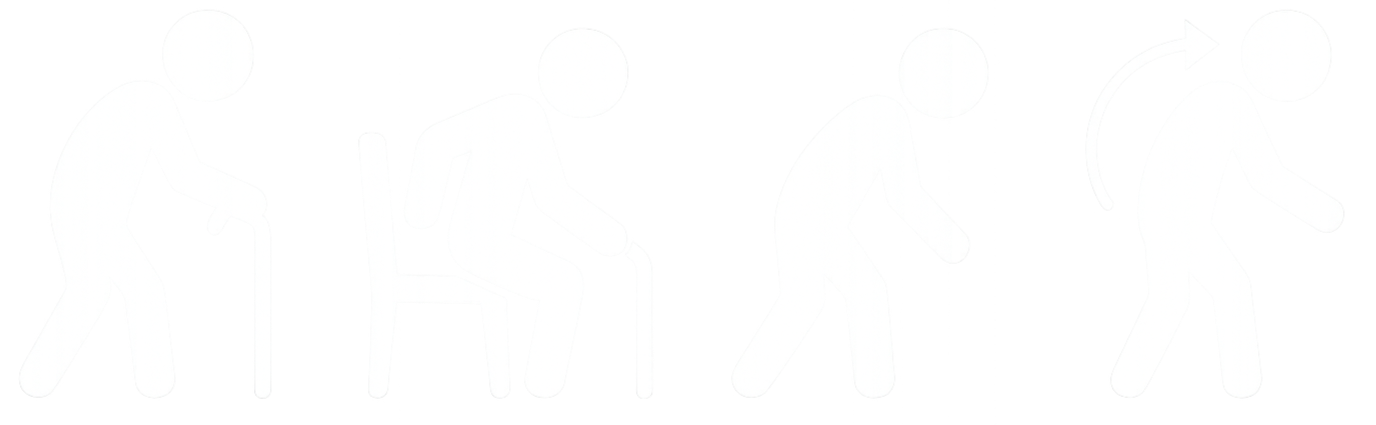
We are the first to perturb people during different daily movements: walking, standing, standing up, sitting down, bending over and turning
We measured a large cohort of young and older people, of different frailty levels. We assessed full-body movement using a body-worn sensor system (IMUs, Xsense)Impact
Our preliminary results show that a person’s reactive balance depends on the movement that is being assessed