
FAB Team


FAB Lead: Dr Lizeth Sloot
Newcastle Academic Track (NUAcT) Research Fellow
Clinical Movement Analysis Society UK and Ireland (CMAS) vice-chair
Email: lizeth.sloot@newcastle.ac.uk
The FAB team advances dynamic balance and movement analysis, focusing on foot-floor interactions, to support effective identification and monitoring of fall-prone persons in ageing and age-related conditions.
Dr Lizeth Sloot is a biomechanist specialising in balance impairment in ageing and neurodegeneration.
As part of her NUAcT fellowship, she develops models and measurement techniques to improve our ability to detect early balance decline. With a focus on how our feet support our bodies throughout different daily movements, her research program aims to co-create accurate, representative, and meaningful balance measures to enable accessible, local balance screening and training.
Lizeth leads the Foot and Balance (FAB) team, whose mission is to develop, validate and translate quantitative balance assessment to improve our understanding of balance problems and to prevent falls. Our team aims to contribute to open science by publishing our datasets, models and code.
FAB Datasets & Models
We are driven to share our datasets, models and code, to help advance the creation new methods and answer new questions.

Our datasets are in the same format, enabling easy merging and analyses in Matlab:
Walking data in 138 adults across the life span (motion, force, EMG) - collaboration with University of Antwerp
Motion data across daily tasks in 109 young and older adults (motion, force) - in development with Heidelberg University & KIT (contact me if you are interested in the dataset)
Motion data across perturbed daily tasks in 60 young and older adults (IMU) - in development with Heidelberg University (contact me if you are interested in the dataset)
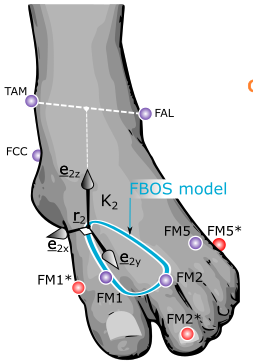
Our models and code for balance analysis:
functional Base of Support (fBOS) for young and older adults. These can be retrospectively attached to PiG or IOR foot marker data using our example data and functions (GitHub) - collaboration Dr. Matthew Millard, University of Stuttgart
Margin-of-stability balance analysis adapted to sit-to-stand and stand-to-sit motions - collaboration Dr. Matthew Millard, University of Stuttgart
FAB Team
-

-

-

-
-

Miss Rishini Fernando
Summer Student (NUMED Malaysia)
Project: hand vs foot control
Supervisor: Dr. Karen Suetterlin & Dr. Lizeth Sloot
-

FAB Studies
-
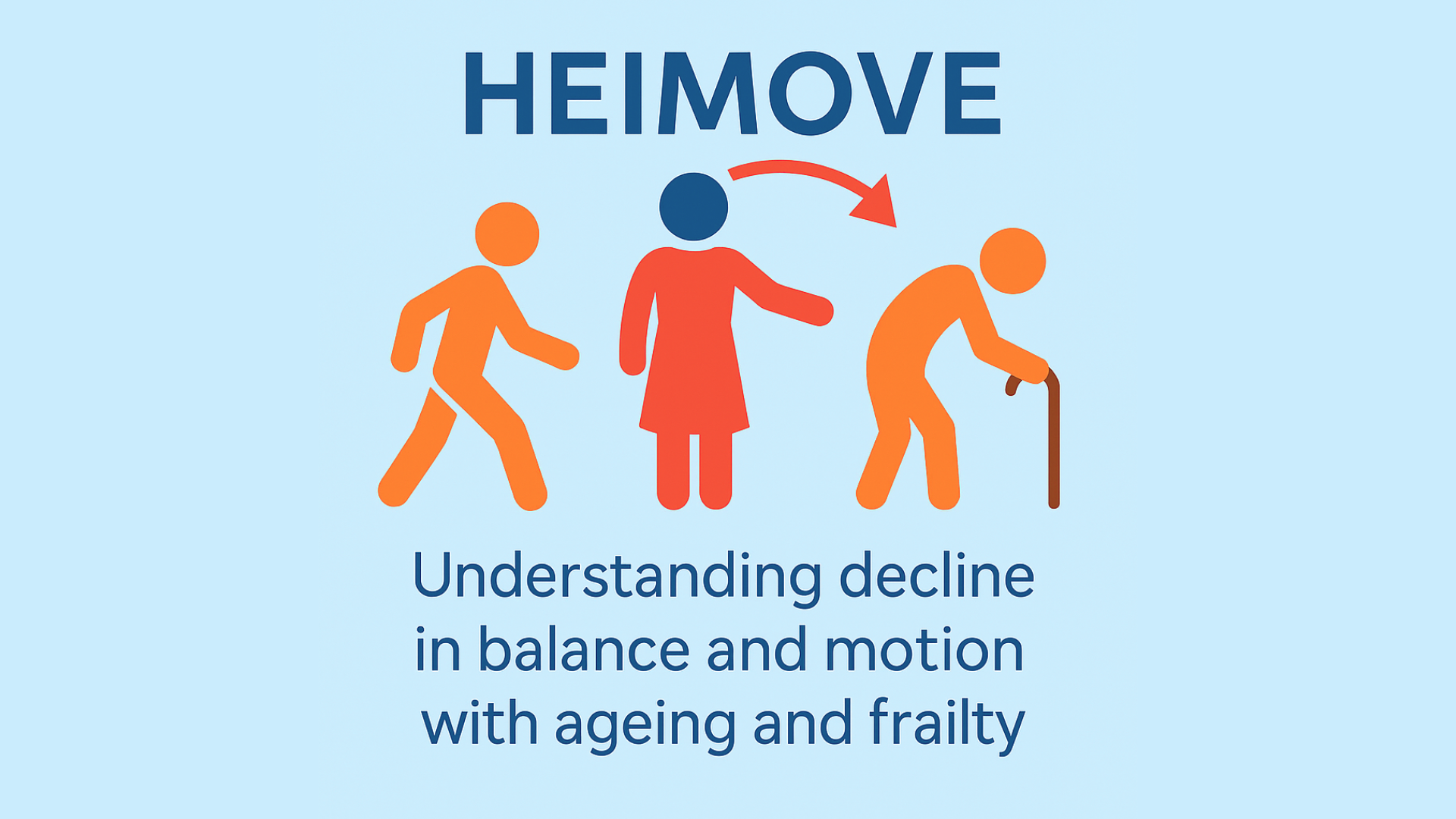
HeiMOVE
Decline in motion and balance with ageing and frailty
Funder: Carl Zeiss Foundation, NUAcT fellowship
Principal Investigator: Dr Lizeth Sloot
This study is linked to the HEIAGE project (PI: Prof Katja Mombaur, KIT Germany)
-

FunBOS
Validating the foot support area we use to stablize ourselves
Funder: Rosetrees & Stoneygate Foundations fellowship, NUAcT fellowship
Principal Investigator: Dr. Lizeth Sloot
Team members: Liyi Chen
-

EPP
Dependence of reactive balance ability on the measured daily movement
Funder: Baden-Württemberg Stiftung
Principal Investigator: Dr Lizeth Sloot
Team members: Nikita Sharma
-

HEIKA
Understanding the effect of rollator support on balance
Funder: Heidelberg Karlsruhe Strategic Partnership
Principal Investigator: Dr Lizeth Sloot